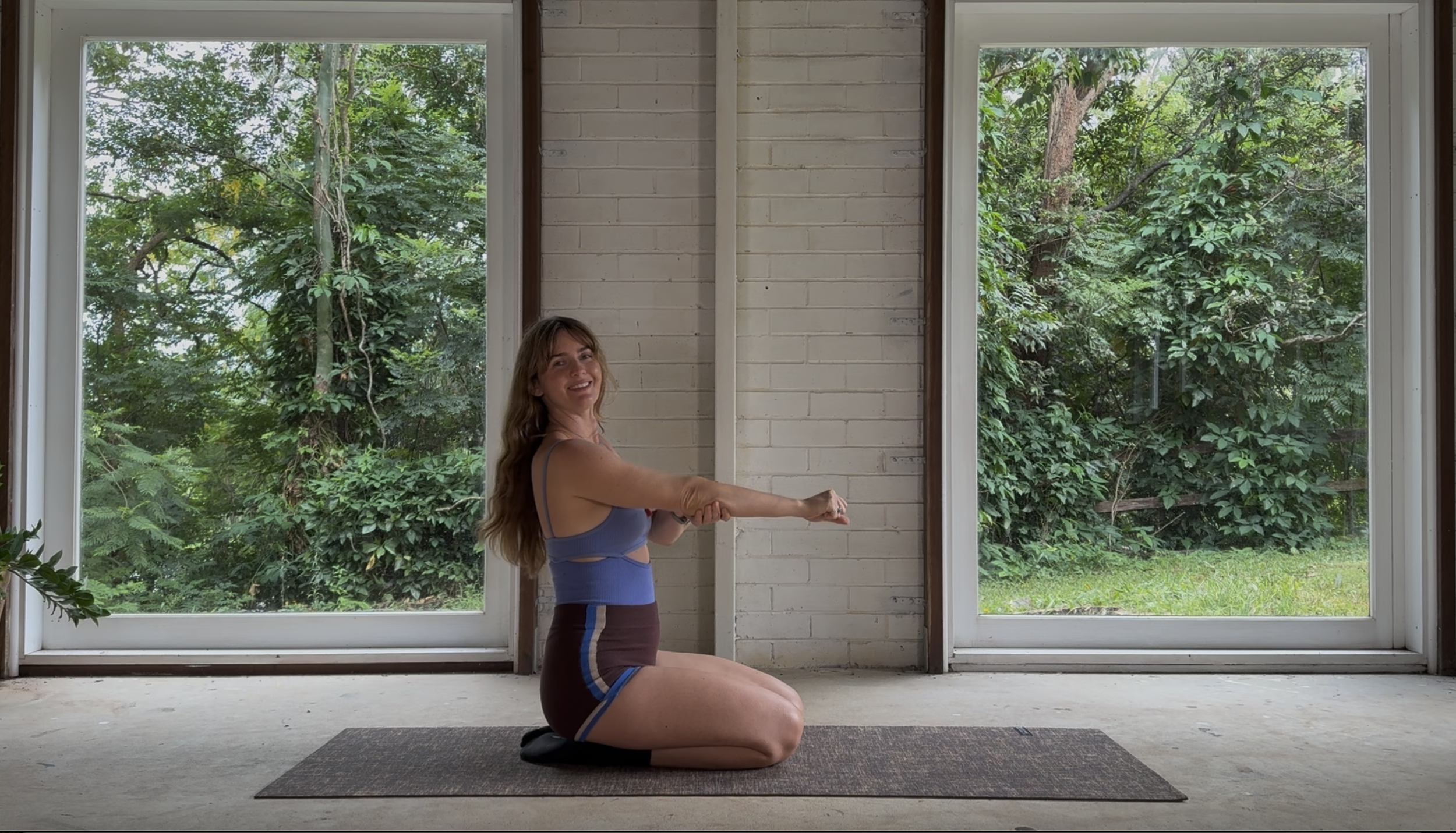
DOES STRETCHING MAKE YOU MORE STIFF?
If you have spent time stretching and notice no positive impact, or even worse, you feel even more more stiff than before, here is the reason why:
Fibroblasts.
Fibroblasts are the intelligent cells within your fascia. They’re responsible for maintaining and reshaping this network by producing collagen and other structural proteins. These cells are highly responsive; they constantly sense pressure, movement, and stretch, and adapt your tissue accordingly.
When we move gently and mindfully, fibroblasts promote softness, hydration, and elasticity in the fascia. But when we overstretch or force movement, they can interpret that as stress or micro-injury. In response, they lay down more collagen or tighten the fibres, which can actually make us more stiff over time.
That’s why fascia release is about slowing down, listening, and inviting the body to unwind rather than pushing it open. Over time, this kind of mindful movement teaches fibroblasts that it’s safe to soften. The result is fascia that’s supple, resilient, and alive, supporting effortless movement and a deeper sense of ease in your body.
How to stretch in a way that actually promotes flexibility & fascia release:
Don’t go to your full range
Engage the muscles while lengthening them
Breathe low and slow to regulate the nervous system
Consistency is key. As little as 5 minutes a day will make a huge impact.
The classes in RUMMĀN guide this exact type of stretch. Join now & experience the difference.
Please let me know in the comments below if you have any questions, I love to hear from you.
All my love,
Cat xx